

970x125
India’s disaster risk reduction strategy should be focused on being people centric and based on inputs from community interaction, Rajendra Singh, head of department, National Disaster Management Authority said on Thursday.
970x125
He stressed that every infrastructure project in the country should be people centric and not expose people to disasters, said Singh, who is also the former director general, Indian Coast Guard.
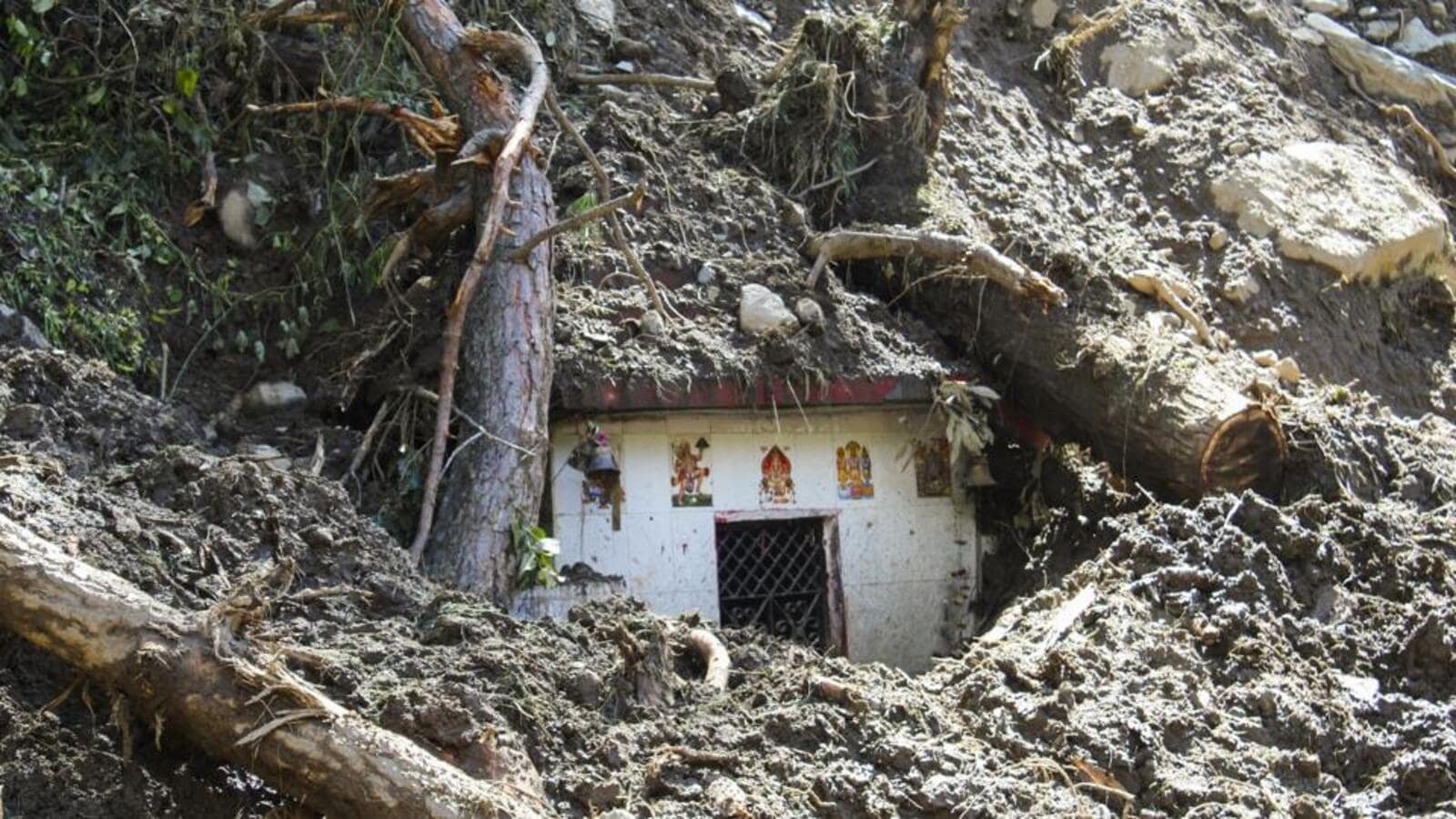
Singh made the remarks while speaking at a session on “Disaster Risk Reduction” organised by Policy Perspectives Foundation (PPF), a think tank, as floods battered many hill states, including Himachal Pradesh, Jammu and Kashmir and Uttarakhand.
“Whatever you are taking up in your region, it must be mapped properly. If you are making a powerhouse in an earthquake area zone 5, in Uttarakhand, you are exposing your people, you are exposing your community. You have to take care,” he said.
Singh said 58% of India’s landmass is at earthquake risk, 12% to floods, out of 7,560-km coastline, 500-800 km coastline is prone to tsunami and cyclone and 12.8% of landmass is at landslide risk.
“My second point is ‘Team India’ approach…Army, Navy, Air Force, Paramilitary Forces, everybody and the others, we have to form like a Team India and third priority is that you have to interact with the community for early warning, we need local volunteers. They are the first responders. Aapda Mitra is there, but Aadhaar Mitra’s job is to train other people. We need to train the communities and the most vulnerable groups,” he said.
Singh pointed out that funds have been made available for disaster management. In 13th Finance Commission, ₹33,000 crores for disasters; in the 14th Finance Commission, it became ₹64,000 crores and in the 15th Finance Commission, around ₹2,28,000 crores is made available for disaster resilience.
Singh further explained that the main priority is to be risk-informed development. “Whatever you are taking up in your region, it must be mapped properly. If you are making a powerhouse in an earthquake area zone 5, in Uttarakhand, you are exposing your people, you are exposing your community. You have to take care. Say, you are making a big jetty and building a big harbour in a coastal area, you have to see, you have to map that area properly, what type of harbour you require, what type of pillars you want to build, and what is the frequency of Tsunami and Cyclone in that area, you have to keep that in mind,” he added.
NDMA experts said Tsunami monitoring by Indian National Centre for Ocean Information Services, the Indian Tsunami Early Warning Centre, the Cyclone warning system have both managed to address mortalities and losses to great extent but gaps remain for other hazards.
Safi Ahsan Rizvi, NDMA advisor (mitigation) pointed out that though loss of life from cyclones has reduced significantly, loss of infrastructure remains a major concern. A recent slow moving cyclone that remained in the ocean for seven days eventually led to massive damages to power infrastructure worth ₹8000 crore; damage to two grids and 250 km power lines; 116 towers; 2.2 lakh power poles among others.
Rizvi further said NDMA had reviewed the August 5 Dharali flash flood event and found that it was a glacial fluvial landslide but there is still a debate among scientists on how the glacial debris may have fallen. One theory is that a part or entire hanging glacier upstream may have collapsed.
970x125
