

970x125
With the steep 50 per cent American tariffs on Indian goods exports kicking in from Wednesday, policymakers in New Delhi have their work cut out. The problem for them, however, is not knowing how long these tariffs will persist and if a policy intervention can be cogently rolled out without clarity over the timeline of the very disruption that it seeks to address.
970x125
These tariffs have, however, triggered serious deliberations on three issues that have been looming on the horizon for years, but certain inertia in New Delhi, combined with an increasingly defensive trade outlook, led to concerted policy inaction. Some of that is now back on the table, precipitated by US President Donald Trump’s tariff action and the realisation that this stance could continue for the better part of the next three years.
One, the heavy reliance of Indian exports on the US market is now a matter of serious debate, given that America has been India’s largest trading partner for the fourth consecutive year now. The nearly $45 billion trade surplus with the US in 2024-25 has largely counterbalanced the trade deficits with other countries, especially China.
Second, to de-risk from this overreliance on the US as a market, there might be a case to aggressively push ahead with not just bilateral deals, but also to be open to the possibility of joining a big multilateral deal in order to integrate into the global supply chains. While China-led RCEP is unlikely to be that option, the Japan-led Comprehensive and Progressive Agreement for Trans-Pacific Partnership or CPTPP could be a possibility. Especially, given that the UK has joined the CPTPP, and the European Union has applied to join the 12-nation pact. China is not yet in. There is a view in New Delhi that India should try to get in by formally applying for a membership to the CPTPP, before China attempts to get in. For this, however, India will have to go through the accession process to join the CPTPP, unlike in the RCEP, where India was an original negotiating State. The positive thing, though, is that key members including Japan, Australia and the ASEAN countries are keen that India joins in. A section within the Union government, though, continues to be vehemently against multilateral trade deals, citing objections from sections of industry, especially the bigger enterprises.
Third, while the US has repeatedly peddled its trade deficit with India, the fact is that America runs close to a $40 billion overall surplus in its trade with India, if revenues from digital services, financial activities, royalties, education and arms trade are taken into account. Analysts have said that this misplaced deficit claim by the US should be counteracted with the overall deficit figures, in a bid to strengthen India’s negotiating position, as and when trade talks resume. There is a belief that the secondary tariffs will go away at some point in the next few months, but the primary 25 per cent tariffs could stay. So the worst case scenario from India’s point of view is already here. “One can only go up from rock bottom,” an official said.
Excessive reliance on the US market
The real big problem for India’s export sector is that it has gotten used to the comforts of the US market – the fact that there was easy access to that big consumer market and that America’s streamlined customs procedures and entry norms offered a seamless experience for exporters. Till Trump took charge in January, Indian goods going into the US faced just an average 4 per cent tariff and virtually no non-tariff barriers. This lulled Indian exporters and the supporting government machinery to double down on the American market, with virtually no real efforts to hedge this exposure over the years. That vulnerability of strategy now stands exposed, just as Europe’s overdependence on the US defence blanket has not been called into question.
As of 2024, the US accounted for around 18 per cent of India’s total exports, a rise from 15 per cent in 2017 and 11 per cent during the lows of the post-financial crisis in 2010. The share of Chinese exports, meanwhile, going to the US has declined from 20 per cent to 14 per cent since 2017, as Beijing consciously diversified its export basket. India’s overreliance on a single market has given Trump a crucial leverage point with India, which he is unabashedly exploiting at the cost of the strategic and diplomatic relationship, which both sides had painstakingly invested in over the last three decades and one that New Delhi had pretty much taken for granted. The belief in government circles here that even in the worst case scenario, Washington DC would maintain a tariff differential between India and China is now a pipedream, at least till Trump’s next tariff tweak.
Story continues below this ad
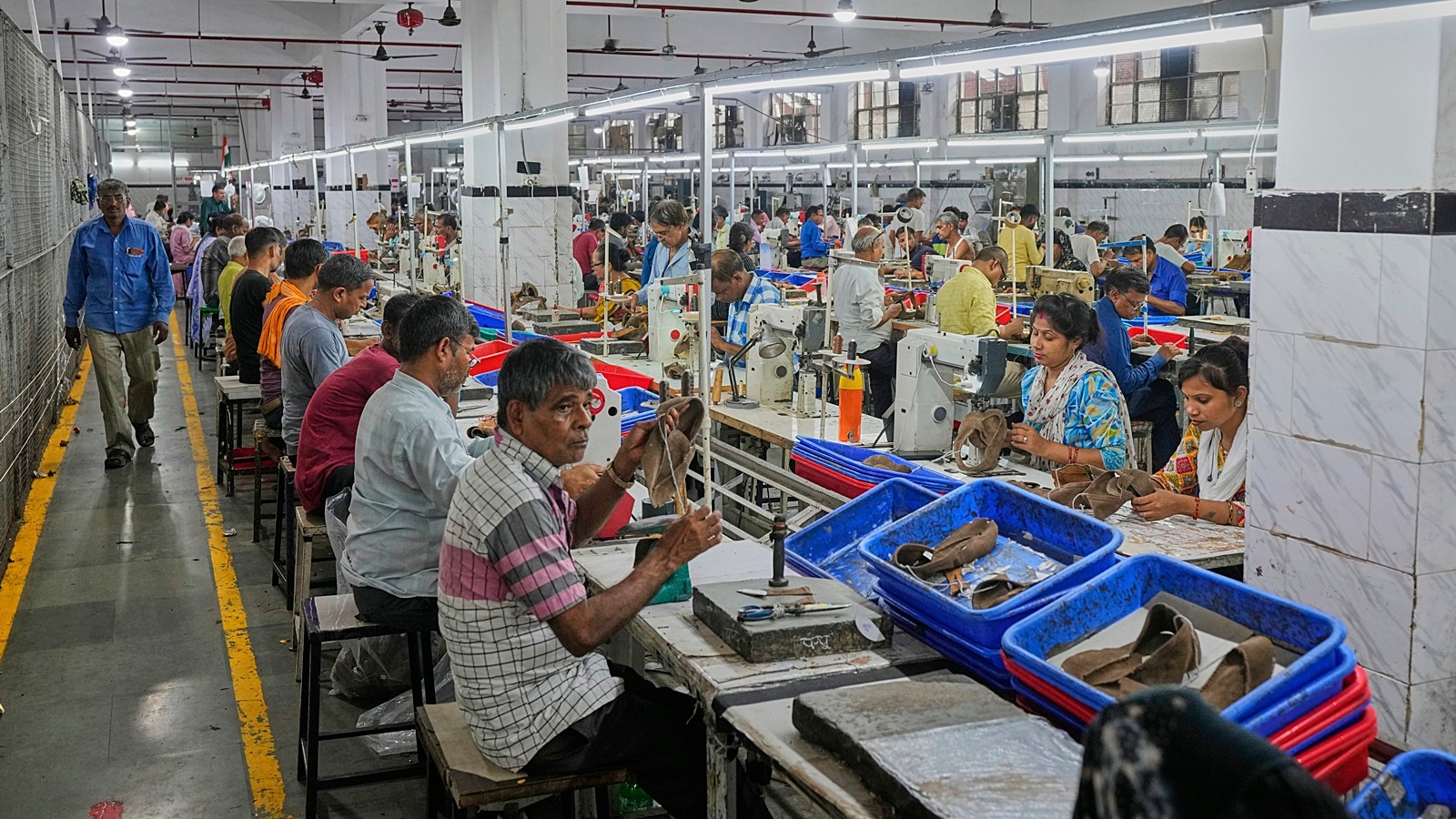
With the steep 50 per cent tariffs kicking in, India’s exports of low-margin and labour-intensive goods ranging from apparel, textiles, gems and jewellery to shrimps, carpets and furniture, are set to become unviable in the American market, jeopardising low-skilled jobs in India. The impact to the economy as a whole might be somewhat overstated, given that exports to the US accounts for less than 2 per cent of India’s GDP and that nearly 40 per cent of export sectors including pharma and electronics are exempted from the punitive tariffs for now. The problem for policymakers, however, is the outsized impact of this disruption on the employment sector, given the labour-intensiveness of India’s export basket to the US. Meanwhile, competitors like Vietnam, Bangladesh, Cambodia, and even China and Pakistan, which currently face lower tariffs from the Donald Trump administration, are set to benefit from India’s potential losses.
To counterbalance the immediate impact, exporters have asked for facilitating access to big domestic buyers, including the Indian Railways and procurement by various government departments and undertakings. The Centre is exploring the possibility of a stop-gap package, including cheaper credit. The problem is that it is not known how long this pain will last and if there is no visibility into how the demand itself will be impacted, credit sops can only solve a small part of this problem. The Federation of Indian Export Organisations said Tuesday that textiles and apparel manufacturers in Tirupur, Noida, and Surat have halted production amid worsening cost competitiveness and uncertainties over flow of fresh orders.
Positive factors
On the brighter side, India is now in a much better position to negotiate multilateral deals as compared to when it jettisoned the RCEP talks, given that New Delhi has now shed some of its diffidence on the trade front. In the UK deal signed earlier this year, Indian policymakers have shown some degree of realism in opening up segments of imports in areas where the country has been relatively weak or in sectors such as intermediate goods. That is being seen as a positive step, given India’s tariff structure currently has rigidities that include high tariffs on inputs and intermediate goods, which acts as a disadvantage to domestic players. With the UK, India has shown accommodation in certain areas that the other side has pushed for, which officials in New Delhi termed as part of a “structured and balanced market access offer” that followed a “development-oriented quota based liberalisation” process. This includes scotch whiskey and cars.
According to analysts, this situation offers an opportunity to genuinely diversify India’s trade basket and look at areas that have been ignored because of the obsession with the US market, including countries in Africa, Latin America and a renewed push into South East Asia. The possibility of entering a global trade alliance has its merits, with the CPTPP the most obvious possibility on the horizon.
Story continues below this ad
According to Delhi-based economic think tank GTRI, there is a need to leverage the $35-40 billion overall surplus in India-US trade on account of revenues from education, digital services, financial activities, royalties, and arms trade when negotiating trade terms with Washington DC, which it said should reflect “the full economic relationship, not just a narrow, cherry-picked slice of the ledger”.
India’s merchandise trade deficit for the fiscal year 2024-25 (April-March) was $283 billion, an increase from the previous fiscal year. This widening of the deficit was seen despite robust growth in the services sector and an all-time high in total trade exports, which reached $825 billion. During the year, India recorded a trade surplus of about $44.4 billion during the period.
India generally maintains a trade surplus with the US and the Netherlands, while facing large trade deficits with countries like China, Russia, and Iraq. The US and the Netherlands have consistently been major sources of India’s surplus in recent trade prints.
970x125
