

970x125
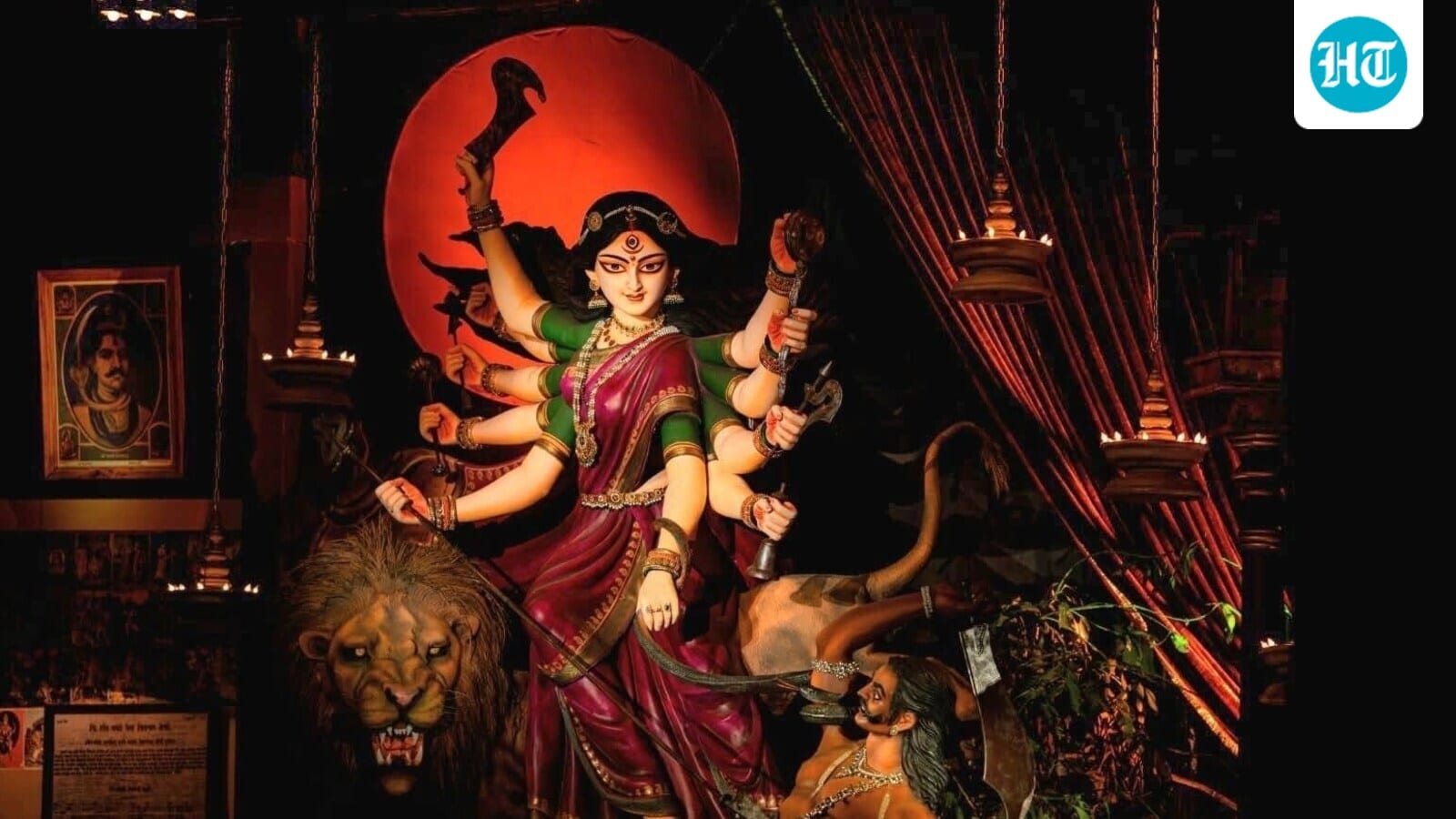
This year at Pratapaditya Road Tricone Park Durga Puja Samity, visitors were treated to framed images of gods and goddesses that reside inside their homes. A familiar sight, indeed, because these were paintings by pioneering artist Raja Ravi Varma, whose humanised depictions of Indian gods and goddesses stirred immense controversy because they dared to be human, departing from traditional iconography.
970x125
Tricone Park delves into the work of this painter and navigates the many ways in which his works continue to define and infuse devotion for generations. Artists Deep Das and Eshika Chandra have spent two years researching to construct this wondrous, visually stunning installation for this year. “We wanted to delve into the source for all the pictures of gods, and it was that search that led us to the world of Raja Ravi Varma’s works,” says Chandra.

The space of the pandal
The pandal is multidimensional in its approach, opening up to various spaces where framed pictures of goddesses are kept in homes. A giant singhasan (a small wooden temple) is placed at the entrance, which then leads the visitor into a space of tangibility for the artists’ creative space, ranging from printing presses to a courtyard-like scaffolding. It takes the eye from one visual marker to the next, vividly capturing a work in progress, the hushed interiors that ultimately lead the visitor to fill in the gaps through their imagination.

Elaborating upon this, Deep says, “We wanted more people to discover the work of Raja Ravi Varma and his immense contribution. The Laxmi and Saraswati pictures in our homes were created by him, and very few of us are aware that they originated from his paintings. Who painted them? Who was the person behind these creations? We wanted people to know the story of this artist and see more of his works here in this pandal.”

The idol and its influence
The idol of Durga here is a work of reimagination, carved in similar humanistic imprints and details like Raja Ravi Varma’s paintings. Created by Saikat Basu, the idol is fascinating to watch. Durga’s triumph over Mahishasura is at a distance, while the Laxmi and Saraswati idols are exact replicas of the painting of Varma. The play of light, so central in the works of Varma, is exquisitely played out in a huge courtyard-like space.
“Our reference point for the idol was the drawings and prints of Raja Ravi Varma. We obtained the reference to Durga and the Asura from the painting of Jatayu’s death. Also, his paintings place tremendous importance on motion, expression and light/shade, which we tried to add here,” says Deep.

At Tricone Park, the goddess is a manifestation of hundreds of people. In their tangible presence is infused the depth of our devotion. As we see what we worship, our connection is complete. It exists in plurality and yet arrived from the canvas of one pioneering artist. This serves as a visual touchstone for everyday worship. We don’t know our gods and goddesses, but we want to see them. But how do we remember our artists who saw them first?
Raja Ravi Varma’s peerless ability to bring deities to life with such humanity continues to shape the way we offer our prayers. His legacy is unparalleled, uniting people in a shared experience. The tribute to his artistry and life through this unforgettable installation at Pratapaditya Road Tricone Park Durga Puja Samity, Kolkata, serves as a poignant reminder that art exists and endures, sometimes chiefly through devotion.
970x125
