

970x125
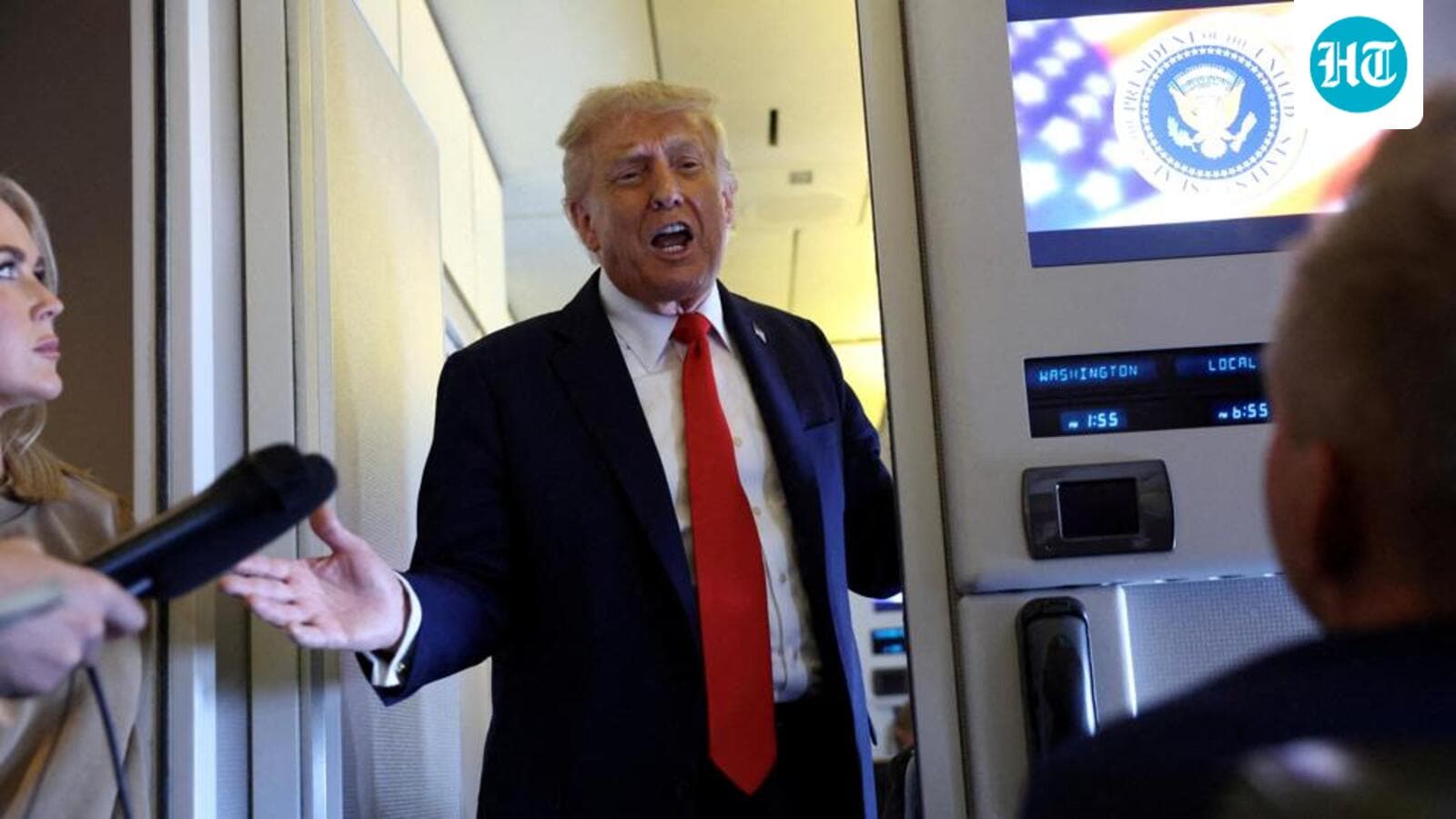
US President Donald Trump on Friday slapped a $100,000 annual application fee on the H-1B visa programme, effectively shutting the door on tens of thousands of skilled Indian employees, especially in the technology sector, and dealing a body blow to generations of people whose American dream was built on the back of the popular route to citizenship.
970x125
The drastic measure, which will come into effect at midnight on September 21 for 12 months and likely face legal challenges, forced tech giants to ask employees abroad to rush back to the US before the deadline, triggering chaos across flights and airports on Saturday, often with less than 24 hours at hand.
The presidential proclamation is likely to effectively kill the programme that is the bedrock of the prosperity of the five-million strong Indian diaspora in the US as the median wage of employees under the regime is lower than $100,000 (approximately ₹88 lakh), according to data from the American government.
“The H-1B nonimmigrant visa programme was created to bring temporary workers into the United States to perform additive, high-skilled functions, but it has been deliberately exploited to replace, rather than supplement, American workers with lower-paid, lower-skilled labour,” Trump said in the proclamation.
“The abuse of the H-1B programme is also a national security threat. Domestic law enforcement agencies have identified and investigated H-1B-reliant outsourcing companies for engaging in visa fraud, conspiracy to launder money… and other illicit activities to encourage foreign workers to come to the United States,” he said in the proclamation.
For generations, tens of thousands of scientists, engineers, doctors, and researchers emigrated to the US using the H1B programme that began in 1990, building wealth and creating a bridge between the two countries. Faster visas and immigration have also been a significant spoke of the India-US bilateral relationship, which is already under strain due to the stiff 50% tariffs levied on Indian goods currently.
“The F1 and H-1B programs were my gateway to world-class education and hands-on experience in cutting-edge tech, building networks, and eventually putting down roots. For the Indian-American tech dream, the H-1B is a lifeline. Sure, the H-1B is outdated and has its flaws, but the recent $100,000 fee is almost equivalent to scrapping it entirely,” says one Indian technology professional to HT, speaking on the condition of anonymity.
The decision dramatically ratchets up the cost of the visas from roughly $2,000 currently, according to Sophie Alcorn, a Silicon Valley-based immigration lawyer.
The visas allow companies to sponsor foreign workers with specialised skills to work in the US, initially for three years, but extendable to six years. The country awards a total of 85,000 H-1B visas per year on a lottery system, with India accounting for around three-quarters of the recipients.
Large technology firms rely on Indian workers who either relocate to the US or come and go between the two countries. Among the companies with the largest number of H-1B workers were Amazon, Tata Consultancy Services, Microsoft, Meta, Apple and Google.
India, meanwhile, urged the US to address the disruptive impact and humanitarian consequences of the decision. In its first response, the external affairs ministry said the full implications of the measure are being studied by the government and other stakeholders, including Indian industry.
“This measure is likely to have humanitarian consequences by way of the disruption caused for families. Government hopes that these disruptions can be addressed suitably by the US authorities,” the ministry said in a statement.
Skilled talent mobility and exchanges have “contributed enormously to technology development, innovation, economic growth, competitiveness and wealth creation” in the US and India, the ministry said. “Policy-makers will therefore assess recent steps taking into account mutual benefits, which include strong people-to-people ties between the two countries,” it said.
The Opposition attacked Prime Minister Narendra Modi and demanded a response from him.
The proclamation said restriction on entry shall apply only to those individuals who enter or attempt to enter the US after September 21, forcing major companies to ask employees to rush back to the US.
Microsoft and JPMorgan, after the announcement of the new fees, advised employees holding H-1B visas to remain in the US. They also advised employees on the H-1B visas who were outside the US to return before midnight on Saturday.
“H-1B visa holders who are currently in the U.S. should remain in the US and avoid international travel until the government issues clear travel guidance,” read an email sent to JPMorgan employees by Ogletree Deakins, a company that handles visa applications for the US investment bank, according to Reuters.
Immigration lawyers advised workers to stay put in the US for now, but warned about the future. “For thousands of Indian tech workers, the proposed fee will likely not force immediate returns but limit job mobility and make renewals costly. Employers may hesitate to sponsor or retain H-1B employees, especially early-career professionals,” said Sophie Alcorn, an immigration lawyer.
To be sure, confusion reigned about how the fees will be administered and processed.
When asked if the new fee will apply to H1-B visa holders already in the US, renewals or first-time applicants, secretary of commerce Howard Lutnick said, “Renewals, first times, the company needs to decide. Is that person valuable enough to have $100,000 a year payment to the government, or they should head home and they should go hire an American.”
“It can be a total of six years, so $100,000 a year. So either the person is very valuable to the company and America, or they’re going to depart and the company is going to hire an American. That’s the point of immigration – hire Americans and make sure the people coming in are the top, top people. Stop the nonsense of letting people just come into this country on these visas that were given away for free,” he added.
On whether the technology CEOs, who hire foreign workers on H1-B visas, are concerned about the new move, Trump said they’re going to be very happy. “We’ve spoken to them,” said Lutnick.
The announcement sparked consternation among US-based IT professionals and Indian-American politicians who said the move will deter global talent and throttle innovation.
Indian-origin American lawmaker from Virginia, Suhas Subramanyam, said Trump’s move is a direct attack on the country’s economy. “An $100,000 fee on all H-1B visas, effective tomorrow. Companies are warning visa holders not leave the U.S. Those outside the country have 24 hours to return or risk being denied. This isn’t immigration policy. This is economic sabotage,” Subramanyam said in a post on X.
A software engineer from Hyderabad working at a fintech firm in Sunnyvale, California, told HT that the move will hit Indian professionals hard.
“An H-1B is valid for three years and has to be extended or transferred frequently, especially since many Indians remain stuck in long queues for a green card or permanent residency in the US. Employers will now find it too costly to sponsor extensions or transfers,” he said, requesting anonymity.
He added that in many cases, the $100,000 fee is equivalent to the annual salary of H-1B visa holders working in US tech firms. “This doubles the cost for employers. They may prefer to keep workers in India, hire locally in the US, or simply outsource more jobs back to India,” he added.
While those with existing H-1B visas for the next year-and-a-half, like himself, may not be affected immediately, several of his friends were worried as “they might have to pack and leave the US soon because their visas will expire soon,” this person said.
The president also unveiled a Trump Gold Card visa programme, where for the price of $1 million, individuals could get US residency. Businesses could buy residency permits for $2 million per employee, while a new platinum-level card set to be issued soon would cost $5 million and allow the holder to come to the US for up to 270 days a year without being subject to US taxes on non-US income.
Together, the moves amounted to a new age of immigration in the US that privileged the super wealthy while enacting barriers for those with lower means and seen as taking away jobs from American workers. It represented a yeoman shift from America’s attitude to immigration historically, which welcomed those of various economic backgrounds coming to the country legally in search of a better life and more freedom.
Still, the signs of a changing tide were increasingly visible with rising anti-immigration sentiment sweeping Trump’s core constituency and the H-1B programme coming under particular fire, from even vice-president JD Vance.
“You see big tech firms laying off 9,000 employees and then applying for thousands of overseas work visas — it just doesn’t add up. That kind of displacement and math concerns me…I don’t support companies firing thousands of American workers and then claiming they can’t find talent here,” he said in a podcast in July.
Trump, along with his former top ally Elon Musk, has historically backed the programme, saying he has used it on his properties and that he’s a “believer”. It remains to be seen if he will change his mind.
970x125
